
Faith and Culture
Jonah Didn't Run in Fear. He Ran in Hate.
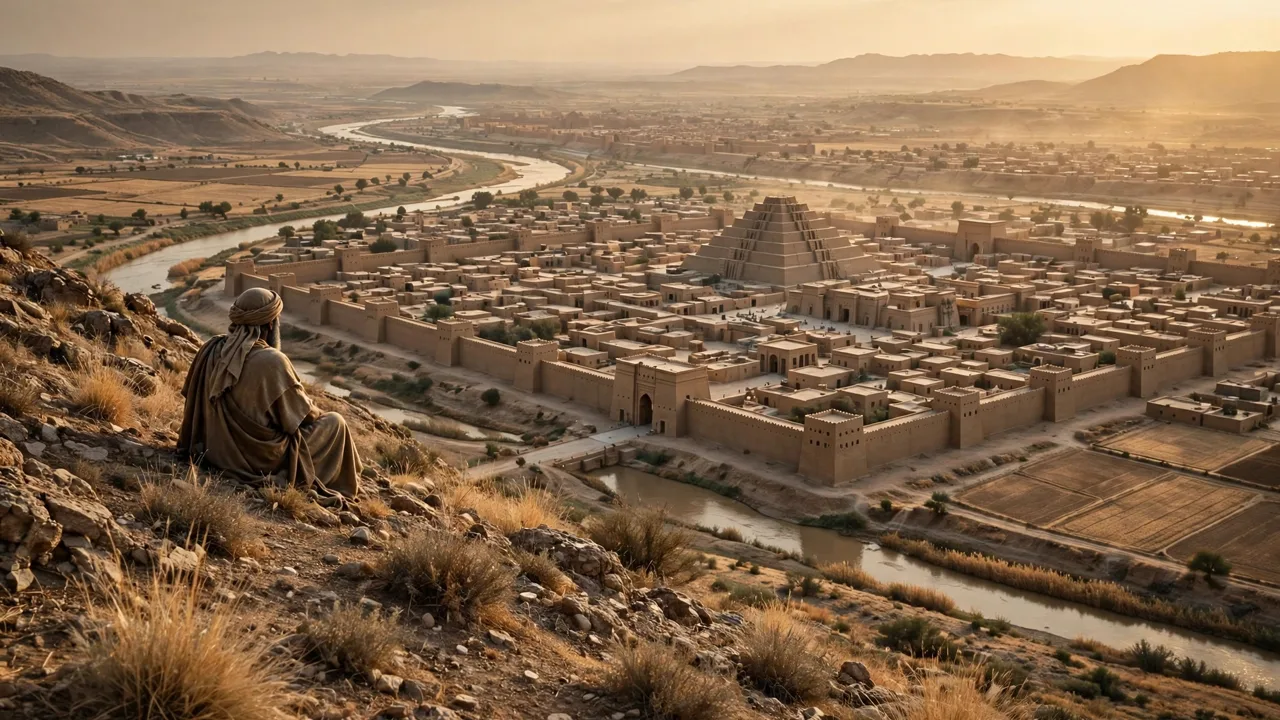
Most of us learned Jonah as a kids’ story. A man runs from God, gets on a boat, a storm comes, a big fish swallows him, he prays, the fish spits him out, and he goes and does what he was told. The lesson we got was simple: don’t run from God, because God will find you.
That’s true. It’s just not the whole story, and it misses the reason Jonah ran in the first place.
Jonah didn’t run because he was scared. He ran because he hated them.
Stop picturing a coward. After Nineveh repents and God forgives the whole city, Jonah finally says the quiet part out loud: “Therefore I went ahead to flee to Tarshish, because I knew that You are a gracious and compassionate God, slow to anger and abundant in lovingkindness, and relenting concerning calamity.” (Jonah 4:2, LSB)
Read that again. That’s why I fled, he says, because I knew You’d forgive them.
He knew God too well
Here’s what’s wild about that prayer: Jonah is quoting God back to God. “Gracious and compassionate, slow to anger and abundant in lovingkindness” is nearly word for word how God described Himself to Moses in Exodus 34. Every Israelite knew those words. They were the creed.
Jonah believed every syllable of it. That’s the problem. He wasn’t doubting God’s mercy. He was counting on it, and he ran to the other end of the known world, a boat to Tarshish, Spain, as far west as a man could sail, so that mercy would never get the chance to reach his enemies.
His theology was perfect. His heart was rotten. A man can have both, and if we’re honest, most of us have proved it.
Who Nineveh actually was
To feel the weight of this, you have to know who he was being sent to.
Nineveh was the capital of Assyria, an empire famous for cruelty to its enemies. That isn’t Bible spin; it’s Assyria’s own advertising. Their kings carved boasts into stone about flaying captives, impaling whole towns, and stacking heads outside conquered gates. Terror was their foreign policy, and they published it. The prophet Nahum, preaching about Nineveh a century later, just calls it “the city of bloodshed.” (Nahum 3:1)
And Israel was in Assyria’s path. Jonah wasn’t being sent to neutral strangers. He was being sent to the people his nation feared most, the butchers everybody knew were coming someday. His hate wasn’t the random kind. It was the kind with reasons. A patriot’s hate. The kind that feels righteous when you’re the one carrying it.
Jonah didn’t want mercy for them. He wanted fire. He wanted the sermon to fail, or better, to land just late enough that God would go through with the judgment.
The worst sermon that ever worked
So he goes, eventually, after the fish. And the sermon he preaches is five words in Hebrew: yet forty days, and Nineveh will be overthrown. No call to repent. No mention of God’s name. No hope offered, because the preacher didn’t want them to have any. It’s the worst sermon ever preached, preached by a man hoping it would fail.
The whole city repented. From the king on down they fasted and put on sackcloth; the king even ordered it for the cattle. And God relented, exactly like Jonah knew He would. And God forgave them anyway when they repented.
Then chapter 4 finds the prophet sitting on a hill east of the city, so angry he asks to die, waiting to see if maybe God will still burn the place down. God gives him a plant for shade, then a worm, then a hot wind, and Jonah is furious about a plant he didn’t plant and didn’t tend. And God asks him the question the whole book has been aiming at: if you pity a plant that came up in a night and died in a night, “should I not have pity on Nineveh, the great city”? (Jonah 4:11, LSB)
The book ends right there. Jonah never answers. The question just hangs in the air, because it isn’t really aimed at Jonah anymore. It’s aimed at whoever’s reading.
Your Nineveh
So here’s where it lands for me, and I don’t get to sit this one out either.
Everybody has a Nineveh. A person, a family member, a whole group of folks you’d honestly rather see judged than forgiven. People who did real damage, so the hate feels earned, the way Jonah’s did. And we’d never say it in church, but part of us is quietly hoping God won’t forgive them. That part of us is Jonah on the hill, angry at grace because grace went to the wrong address.
But hold on. Before we were the prophet on the hill, we were the city in the plain. Scripture says that while we were still sinners, while we were enemies, Christ died for us. (Romans 5:8, 10) God looked at our Nineveh and sent mercy instead of fire. The grace that offends us when it lands on our enemies is the same grace that’s the only reason we’re standing here.
Jonah’s story doesn’t end with the fish. It ends with a question God is still asking His people: who’s the Nineveh you’re still hoping God won’t forgive? That’s the part nobody wants to preach.
I don’t have comments turned on here, so just sit with the question a minute before you scroll on: do you have a Nineveh? What would it take for you to want mercy for them instead of fire? And if it stirs something up in you, I put these same posts over on my Facebook page, where we do talk it out like folks who’ve been forgiven more than we deserved. Either way, don’t leave God’s question sitting unanswered on that hill. It wasn’t only for Jonah.
God bless y’all, see you later,
John